Women as Catalysts of Rural Economic Development- Assessing the Significance and Impacts on Health and Socio-Economic Status of Women in Agriculture
20-06-2025

Abstract
Rural women play a pivotal role in India’s economic development, significantly contributing through agriculture and entrepreneurship. Women constitute nearly 73% of the rural agricultural workforce. Despite encountering challenges such as limited access to land, education, and credit, rural Indian women play a crucial role in enhancing food security, generating income, and fostering community development. This article explores their contributions, emphasising on their impact on agricultural productivity, household economies, and sustainable development. Further, it evaluates the challenges that rural women face in the context of workforce participation, including socio-economic status, issues of unpaid labor and inadequate infrastructure, and examines policy inefficiencies that hinder empowerment. Finally, it offers policy recommendations to empower rural women, in alignment with India’s development objectives and Sustainable Development Goal 5
Introduction
Agriculture is a cornerstone of India’s economy, accounting for approximately 16% of GDP and employing nearly 46% of the workforce (Economic Survey 2024-25). However, with increasing -urban male migration and a shift of men to non-farm sectors, women are increasingly taking on agricultural roles—a trend termed as the "feminisation of agriculture." Despite their critical contributions, women in this sector face systemic challenges, including limited land ownership, wage disparities, and health risks. The NITI Aayog Report,2022 states that agriculture employs over 80% of the rural women workforce, playing a pivotal role in sustaining household and community economies. Yet, their efforts remain undervalued due to entrenched patriarchal norms and structural barriers.
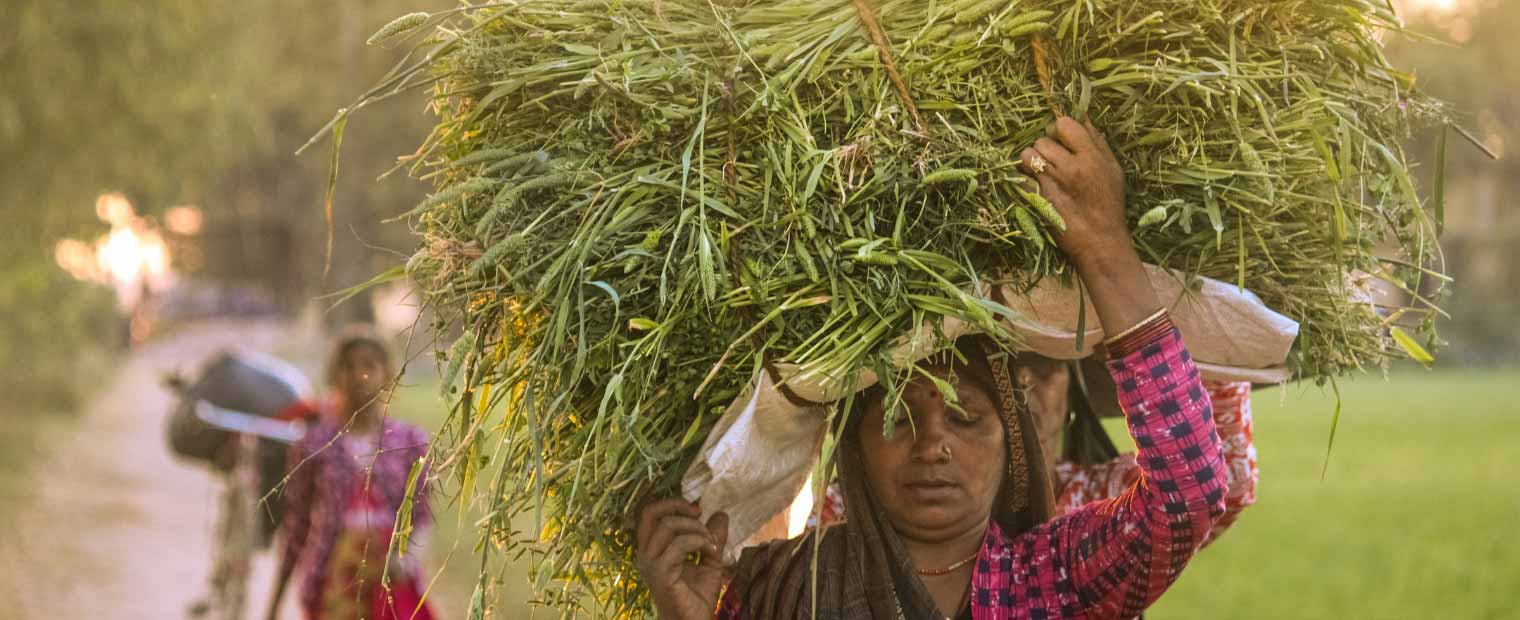
Agricultural Census 2015-16 states that India’s agricultural sector is sustained by women’s labor, as they constitute 73% of the rural agricultural workforce and perform nearly 70% of all agricultural activities. Land ownership in India remains deeply gendered because of patriarchal norms such aslegal rights and inheritance bias towards males. Only 14% of operational landholdings are held by women in India. (Agriculture Census, 2015-16, p.7). Despite their extensive labor, they are categorised as “agricultural laborers” or “cultivators”, rather than farmers(Mohan, 2017). This shows them as mere cultivators rather than realizing them as owners of land, which denies them social and legal rights over the agricultural land.According to the Census of 2011, among female workers, 55% were agricultural laborers and 24% were cultivators. Only 12.8% of these women owned land or held legal land rights.
ROLE OF WOMEN IN RURAL ECONOMIES
As reported by the PLFS 2023-24, the Rural Labor Force Participation Rate stands at 63.7%, in contrast to 52% in urban areas. The Female Labor Force Participation Rate (LFPR) has risen to 41.7%, demonstrating a notable increase in rural female LFPR to 47.6%, compared to 28% in urban areas. This upward trend in rural women's LFPR can be attributed to the feminisation of labor particularly in agriculture and related activities. Consequently, the rural female unemployment rate has decreased significantly to 2.1%.
Activities such as dairy farming, poultry, and handicrafts empower women to achieve financial independence. Women-centric groups, like Self-Help Groups (SHGs) in Tamil Nadu and Kerala, have successfully empowered rural women by promoting financial inclusion, entrepreneurship, and social mobility, thereby transforming them into vital contributors to local economies. According to the Sixth Economic Census (2013-14), 13.76% of proprietary enterprises in India are owned by women, with many of these businesses based in rural areas.
CHALLENGES FACED BY RURAL WOMEN
One of the most pressing issues is limited land ownership. Despite performing nearly 75% of farm labor, only about 13% of women own land due to patriarchal inheritance laws and social norms (Agricultural Census 2015-16). This lack of ownership restricts their access to credit, government subsidies, and decision-making power within farming households. Furthermore, gender wage gaps persist, with women earning 20-30% less than men for the same agricultural work, reinforcing their financial dependence.
Women farmers struggle to secure loans, as banks often require land titles as collateral, which most women do not possess. Government schemes like PM-KISAN and Kisan Credit Cards primarily benefit male landowners, leaving women reliant on informal and high-interest loans. Social and structural barriers impede progress, restricting decision-making at the panchayat level. While schemes like Mahila Kisan Sashaktikaran Pariyojana(MKSP) aim to empower women farmers, implementation remains weak due to bureaucratic delays and a lack of awareness.
Additionally, the limited adoption of technology exacerbates inefficiencies—agricultural machinery is primarily designed for male users, making it physically difficult for women to operate. Training programs on modern farming techniques rarely reach women due to socio-cultural barriers and low literacy rates. These increase the economic vulnerability of rural women in India.
Agricultural work is physical intensive, challenging women body metabolism. Exposure to chemical pesticides leads to respiratory illnesses and skin diseases. Furthermore, lack of financial support limits affordable healthcare and accessibility to nutritious food in rural areas that worsens these health conditions, with many women prioritizing family needs over their well-being.
Despite the success of SHGs in states like Kerala and Tamil Nadu, scaling up collective enterprises remains a challenge. Many women-led cooperatives lack market linkages, digital literacy, and access to infrastructure like storage facilities, limiting their income potential. Moreover, migration of men to urban areas has increased women’s workload without commensurate recognition or policy support.
Conclusion
Tackling issues faces by women in the agricultural sector demands gender-sensitive policies, land reforms, improved credit access, women-friendly farming tools, and healthcare programs designed for the specific needs of rural women. Empowering SHGs, fostering Farmer Producer Organizations (FPOs), and increasing women’s participation in agricultural decision-making can enhance the transformative potential women can play in rural development.
Rural women in India are vital to economic development, driving agriculture, entrepreneurship, and community initiatives. Despite their significant contributions, systemic barriers like resource constraints and gender inequality limit their potential. By implementing targeted policies and empowering women through education, resources, and support systems, India can harness their economic contributions to achieve sustainable development and gender equality.
References