Menstruation Dialogue 2026: Event Highlight
1 July 2026
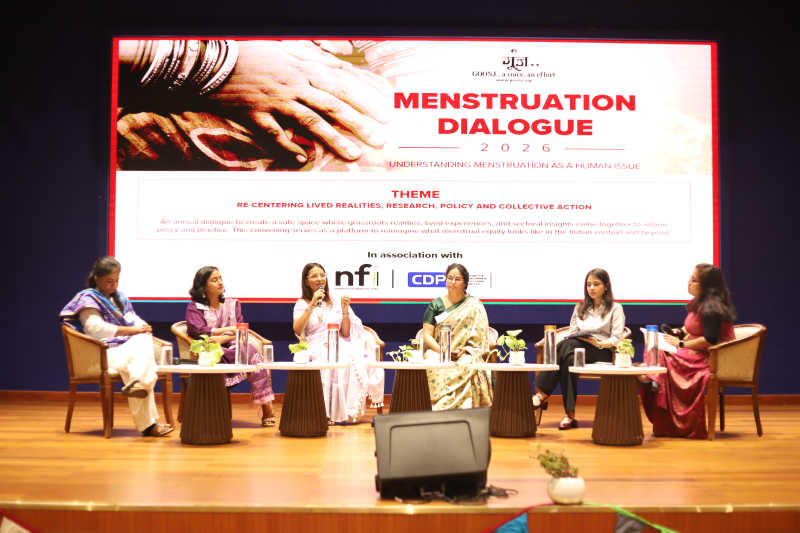
Organised by Goonj, in association with the Centre for Development Policy and Practice (CDPP) and National Foundation for India (NFI)
Theme
Re-centring Lived Realities, Research, Policy and Collective Action
Date
Wednesday, 1 July 2026
Venue
Vishwa Yuvak Kendra, Pt. Uma Shankar Dikshit Road, Teen Murti Marg, Chanakyapuri, New Delhi – 110021
About the Dialogue
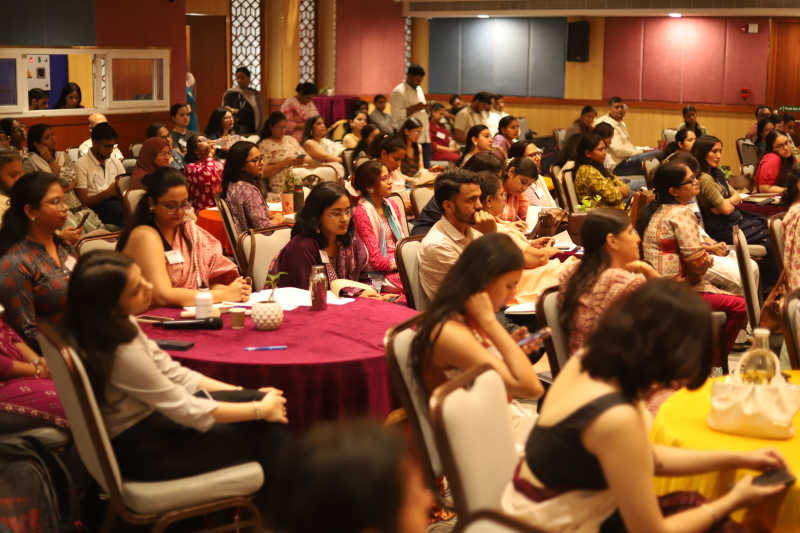
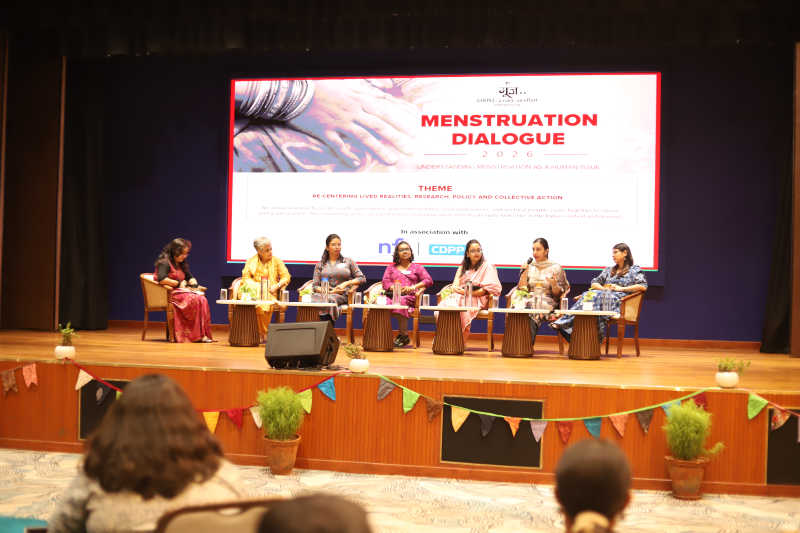
Menstruation Dialogue 2026 brought together grassroots practitioners, researchers, policymakers, civil society organisations, funders, artists, and community leaders to collectively reframe menstruation as a human issue connected to dignity, health, education, livelihoods, climate resilience, and social justice.
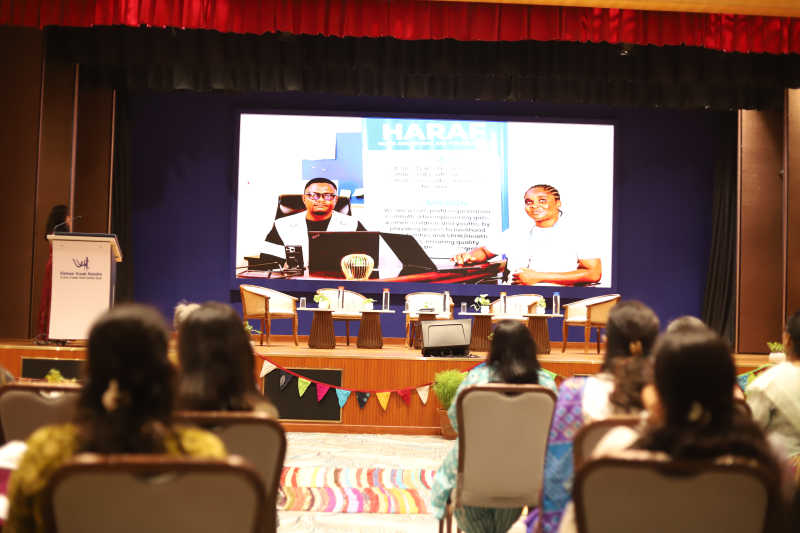
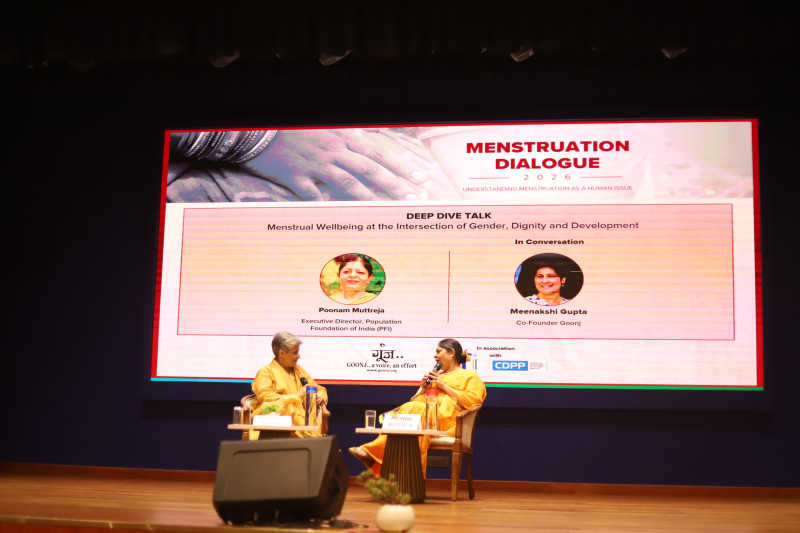
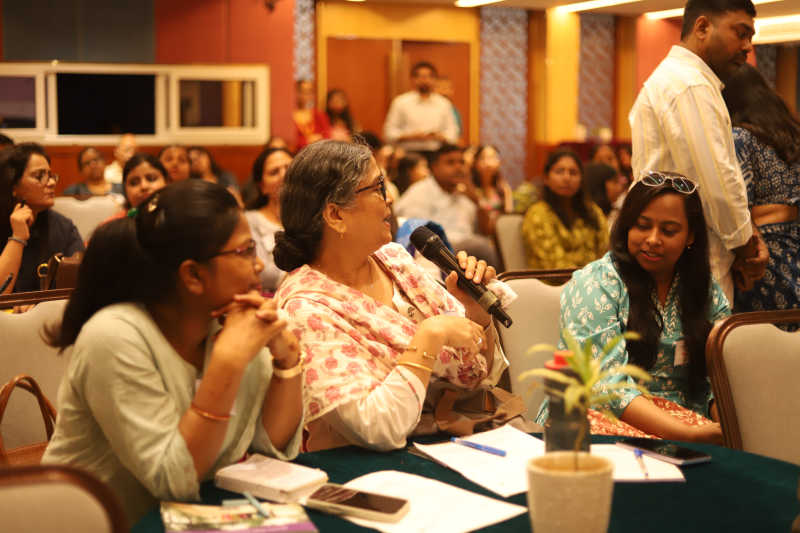
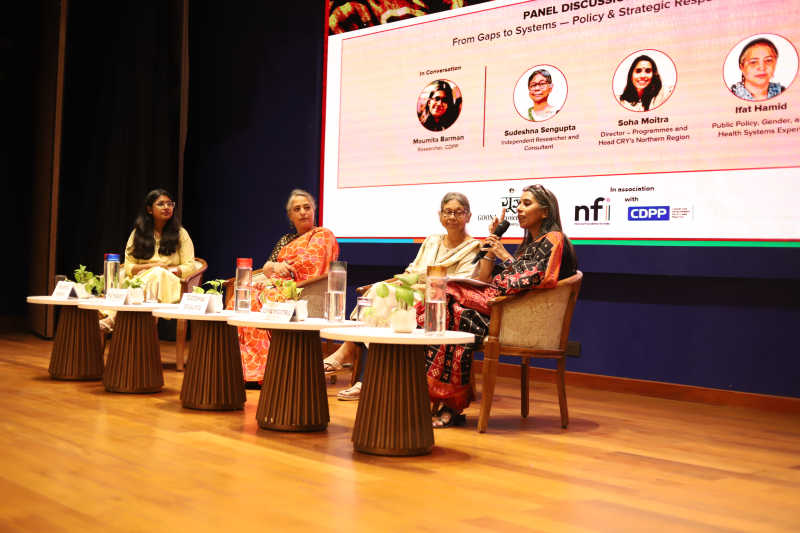
Co-hosted by Goonj, the Centre for Development Policy and Practice (CDPP), and the National Foundation for India (NFI), the Dialogue created a space where lived experiences, evidence, policy, and practice informed one another. Through keynote conversations, research presentations, panel discussions, cultural performances, and community storytelling, participants explored pathways towards more inclusive and equitable approaches to menstrual wellbeing.
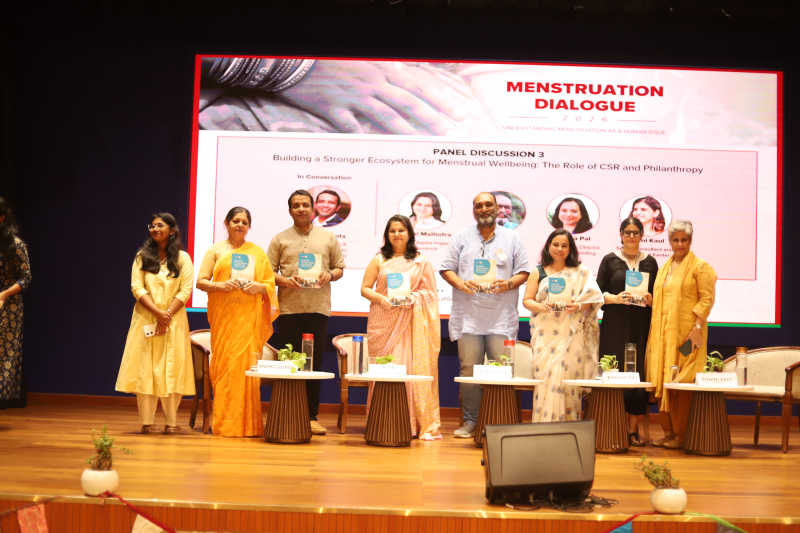
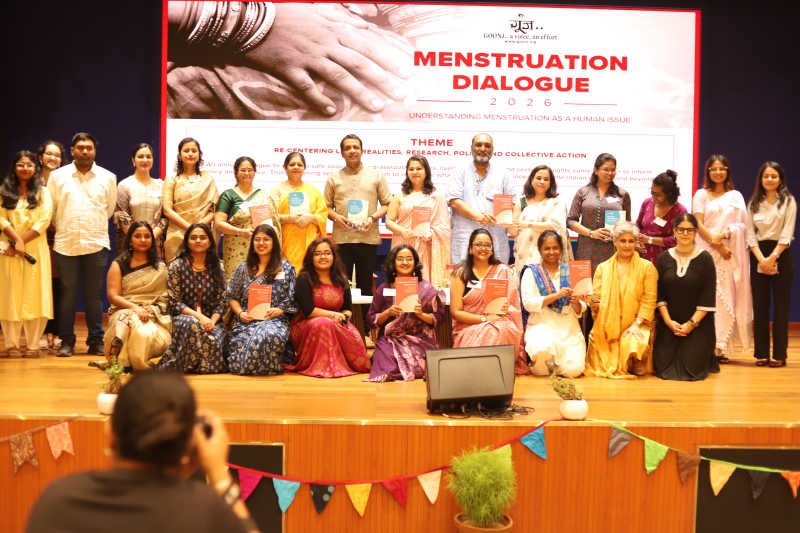
A major highlight of the event was the launch of the inaugural Menstruation Dialogue Special Issue, published by CDPP. The publication brings together multidisciplinary research, lived realities, and policy perspectives that strengthen evidence-based conversations on menstrual wellbeing as a matter of public health, dignity, gender justice, and development.
Key Reflections from the Dialogue
Menstrual wellbeing is a human issue, deeply connected to dignity, mobility, education, and equal participation. It is not simply a women's issue.
Research, lived experiences, and grassroots knowledge must inform policy and implementation.
Menstrual justice requires coordinated action across government, civil society, philanthropy, academia, and communities.
Policy discussions highlighted the need to move beyond product distribution towards rights-based approaches that include education, infrastructure, workplace dignity, inclusion, and institutional accountability.
Evidence presented during the launch of the Special Issue reinforced that menstrual experiences are shaped by caste, geography, disability, conflict, migration, and other social inequalities, requiring context-specific responses.
Participants emphasised that meaningful impact should be measured not only through distribution metrics but through improvements in dignity, confidence, participation, and bodily autonomy.
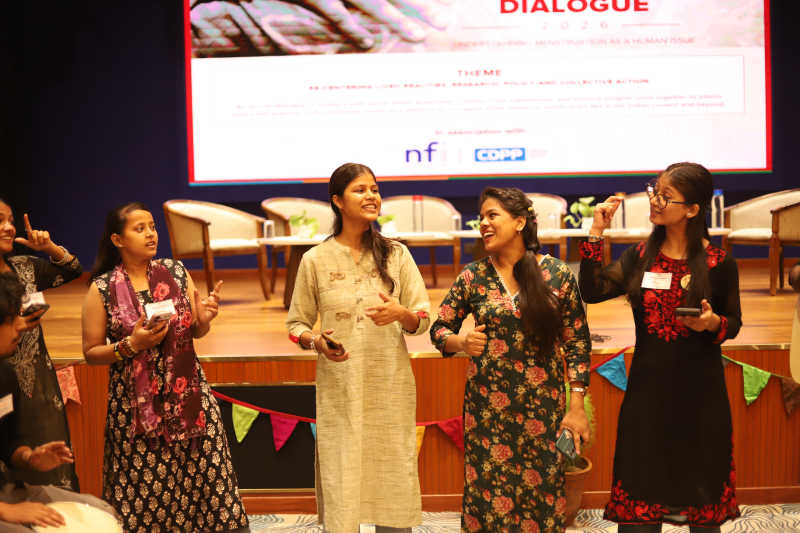
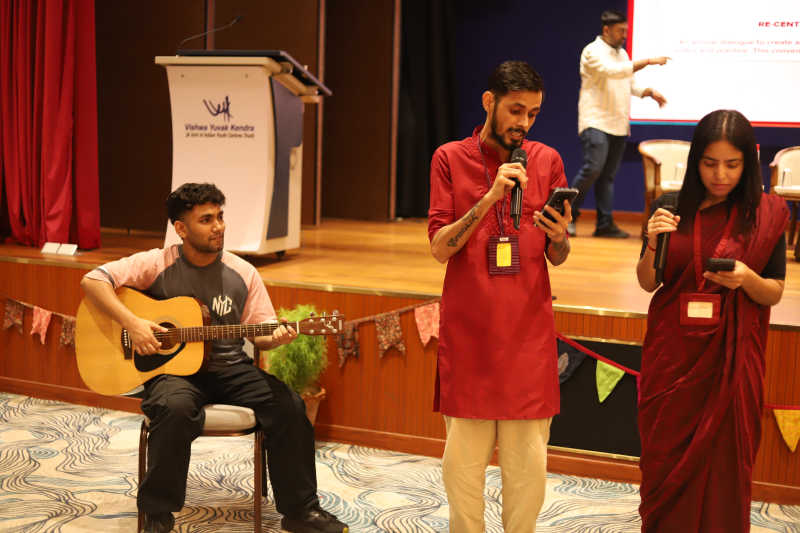
Cultural performances, songs, and storytelling demonstrated how art can help break stigma, normalise conversations around menstruation, and inspire collective action.
Looking Ahead
The Dialogue reaffirmed that menstrual wellbeing cannot be addressed in isolation. It must be embedded within broader conversations on health, education, livelihoods, climate resilience, gender equality, social protection, and development.
With its commitment to convene annually, the Menstruation Dialogue aims to continue strengthening collaboration between communities, researchers, practitioners, and policymakers while advancing menstrual justice through sustained dialogue, evidence, and collective action.