Speaker: Rukmini S.
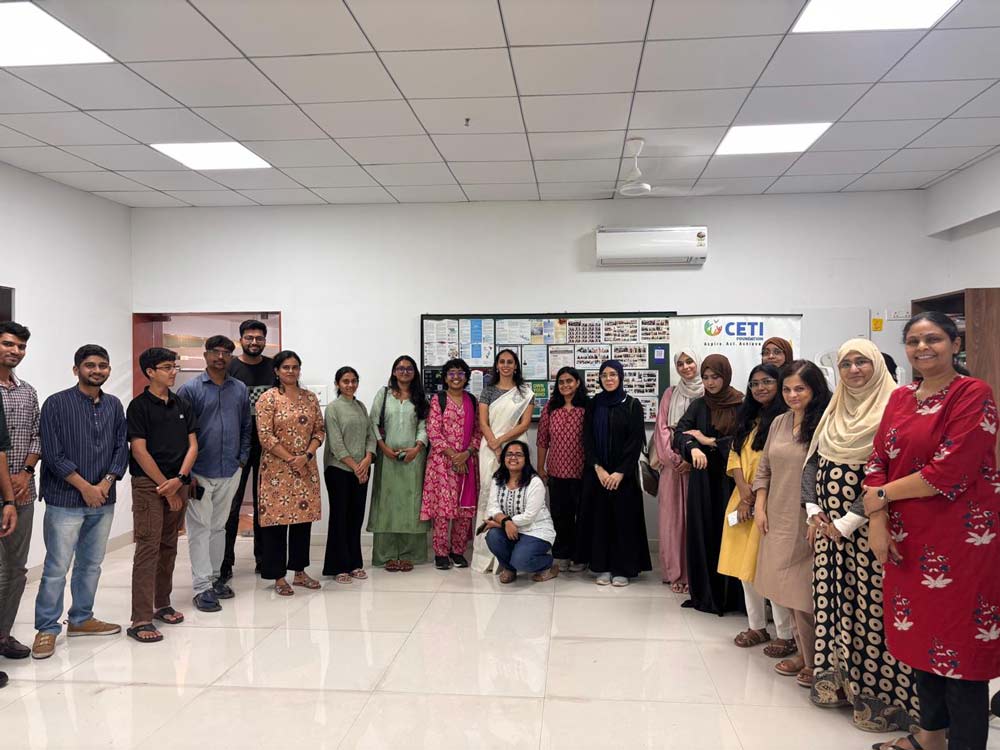
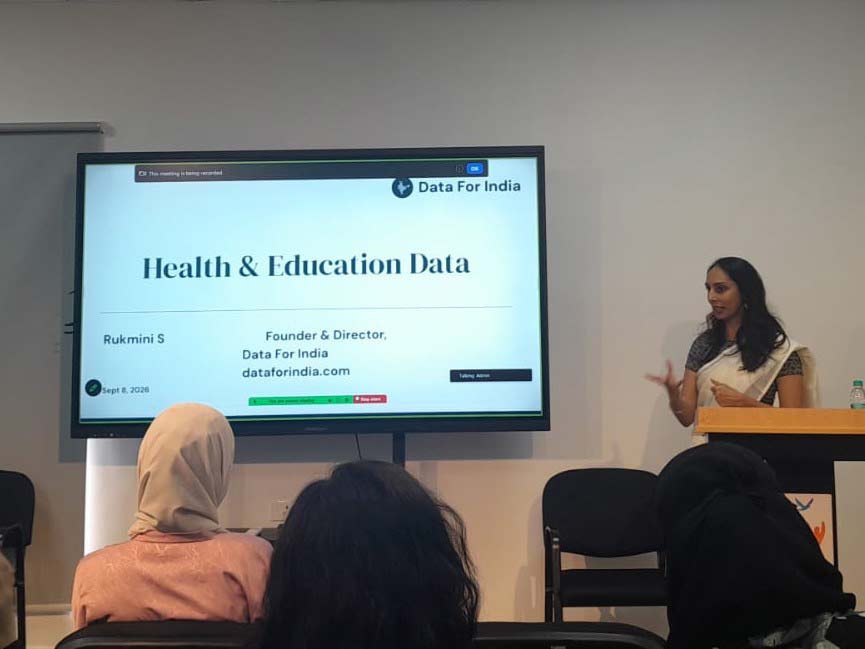
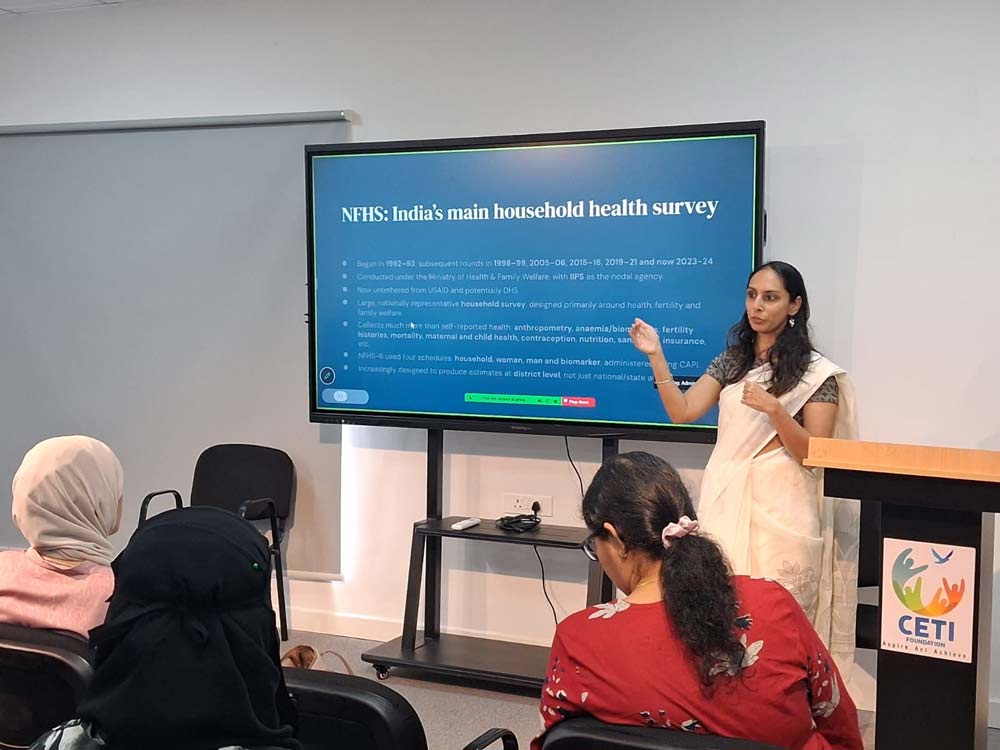
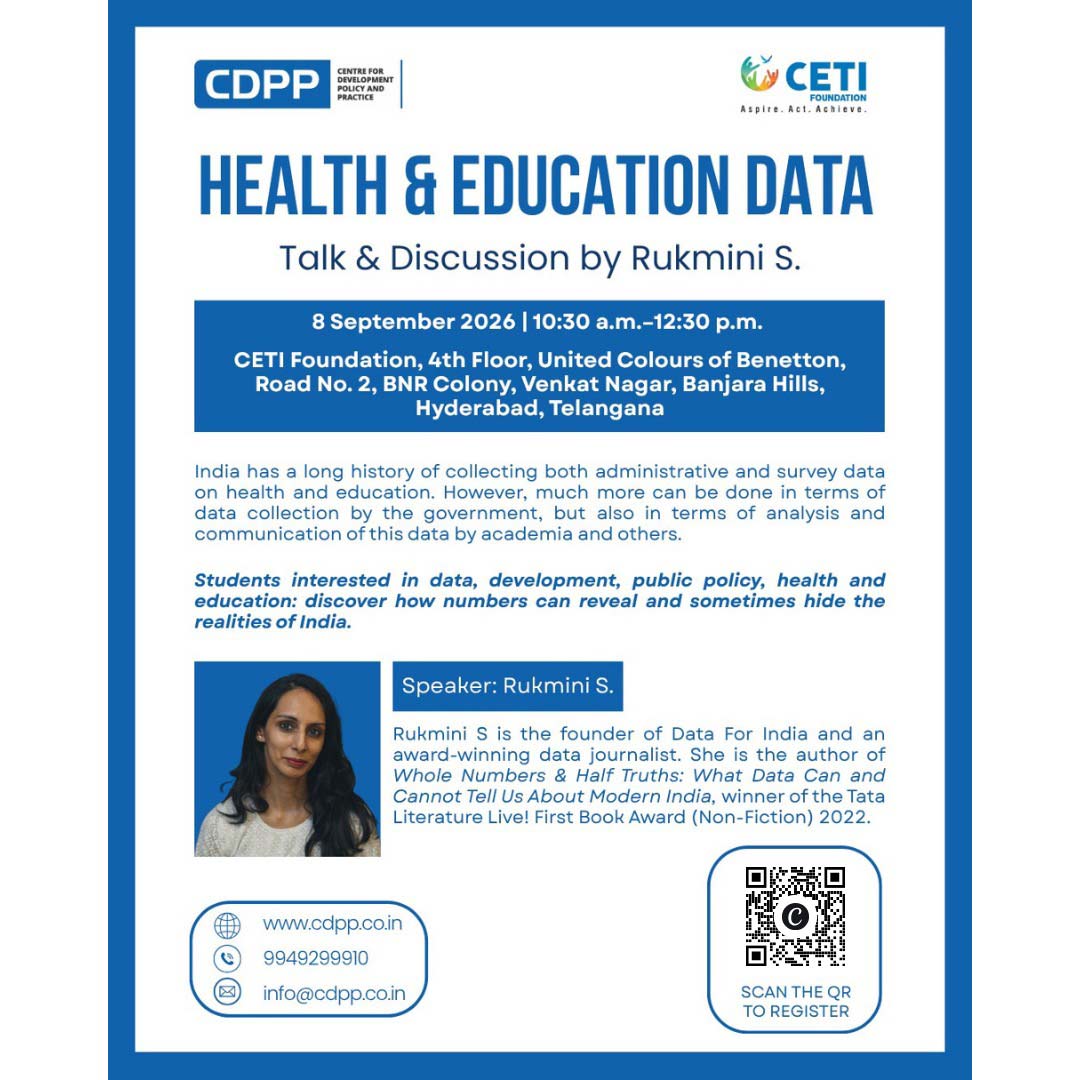
The Centre for Development Policy and Practice (CDPP), in association with CETI Foundation, organised a talk and discussion on “Understanding Health & Education Data” with Rukmini S. on 8 September 2026 at the CETI Foundation office, Venkat Nagar, Banjara Hills, Hyderabad.
About the Talk
India collects a vast amount of health and education data. But what can the numbers actually tell us? What might they leave out? And how can data be better analysed and communicated to understand the realities of India?
Highlights from the Talk
Rukmini S. led an engaging discussion on how health and education data in India is collected, measured and interpreted, and why researchers and citizens need to look beyond headline numbers. She emphasised that data is not simply about numbers; it is equally about understanding what is being measured, how it is measured, who is captured, and what may be missing.
The session began by distinguishing between Administrative Data, generated through government systems and facilities, and Survey Data, collected directly from households and individuals. While administrative systems are useful for monitoring programmes, they can significantly undercount disease because reporting is often concentrated in public facilities.
A key example was “malaria mortality”. Government administrative data reported 963 malaria deaths in 2005, while India's Sample Registration System estimated more than 2 lakh deaths. By 2022, reported deaths had fallen to 83, but SRS estimates were still around 12,000, illustrating the scale of under-reporting and the importance of triangulating different data sources.
The discussion also highlighted measurement problems, using anaemia as an example. Rukmini explained the difference between capillary (finger-prick) and venous blood testing and argued that the quality of measurement needs to be examined before interpreting trends. The broader message was to critically assess data rather than accept or reject it based on whether the numbers appear favourable or unfavourable.
On education, the session examined sources such as UDISE+, AISHE, NSS and PLFS, alongside assessments such as ASER, NAS and PISA. ASER's household-based assessments have been particularly important in bringing the issue of learning outcomes, rather than merely school enrolment, into public discussion.
An important gender-related discussion focused on the closing gender gap in school and higher-education enrolment, while recognising that girls continue to face barriers to remaining in education and transitioning into employment. At the same time, higher dropout and weaker progression among boys also warrant attention.
Rukmini stressed the importance of triangulation, documentation and critical engagement with datasets. She noted that data quality problems should be identified with evidence rather than dismissed through blanket claims of political manipulation. Examples included sampling errors identified in the PLFS and limitations found in NFHS data.
The audience raised questions on the following lines which were adequately answered:
· How can people without a background in mathematics or statistics begin working with data?
· How do inaccurate cause-of-death records affect mortality estimates?
· Why are girls increasingly ahead of boys in higher education, and should greater attention be paid to boys' dropout rates?
· Can research be published using datasets with known limitations or methodological flaws?
· What public data is available on **menstrual health and teacher education quality**?
· What can India learn from countries such as **China and Brazil** in terms of data systems and statistical methods?
· How much of the World Bank's data comes from national sources, and how much is independently collected or modelled?
· What data is available on mental health and finer social-group differences?
· How political is data collection—including what is included, excluded, asked and made publicly available?
· How should researchers deal with changes in survey methodology that make comparisons across time difficult?
· Where can internationally comparable data on ICT skills and SDG indicators be accessed?
The session concluded with a call for better disease surveillance, stronger mortality data, greater focus on education quality and outcomes, keeping open datasets accessible, and making better use of emerging data and technology.