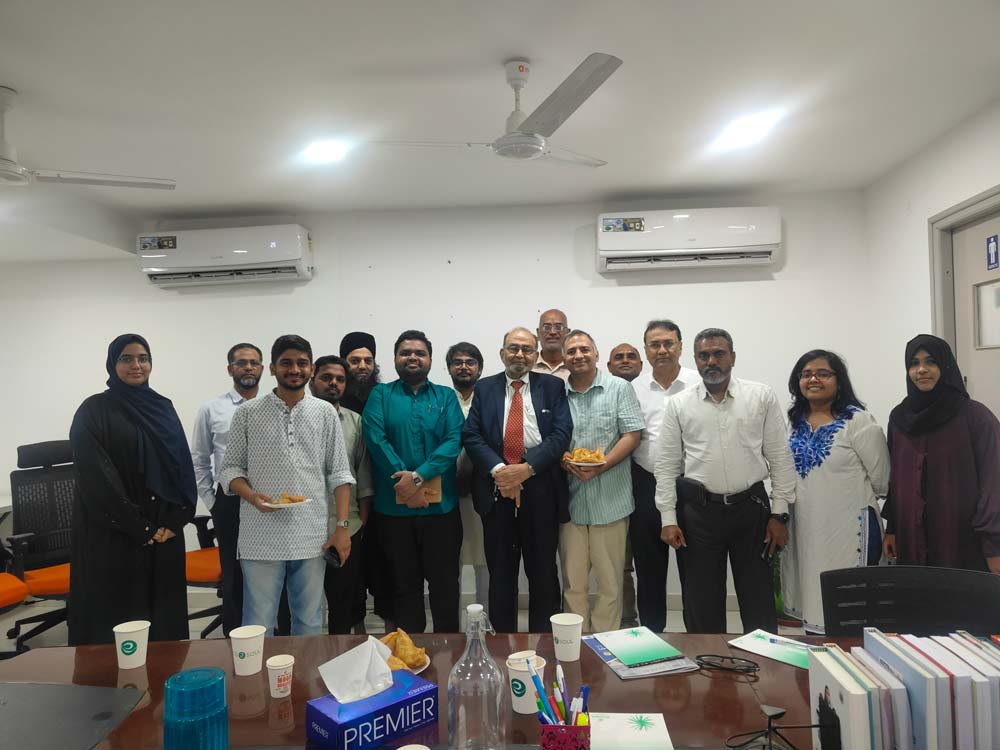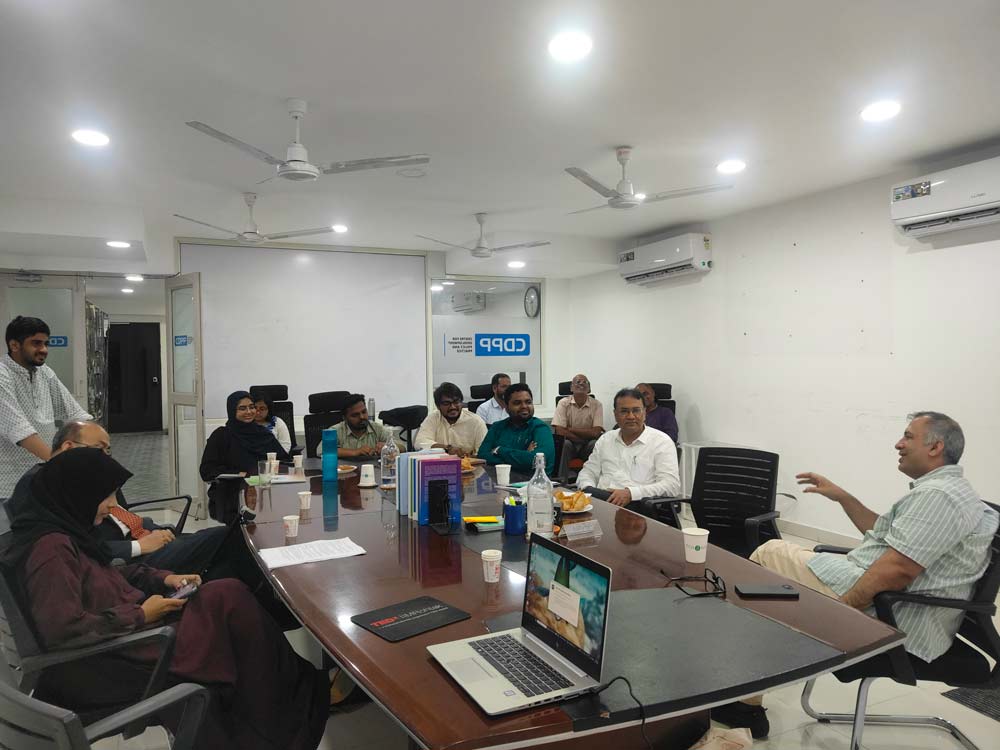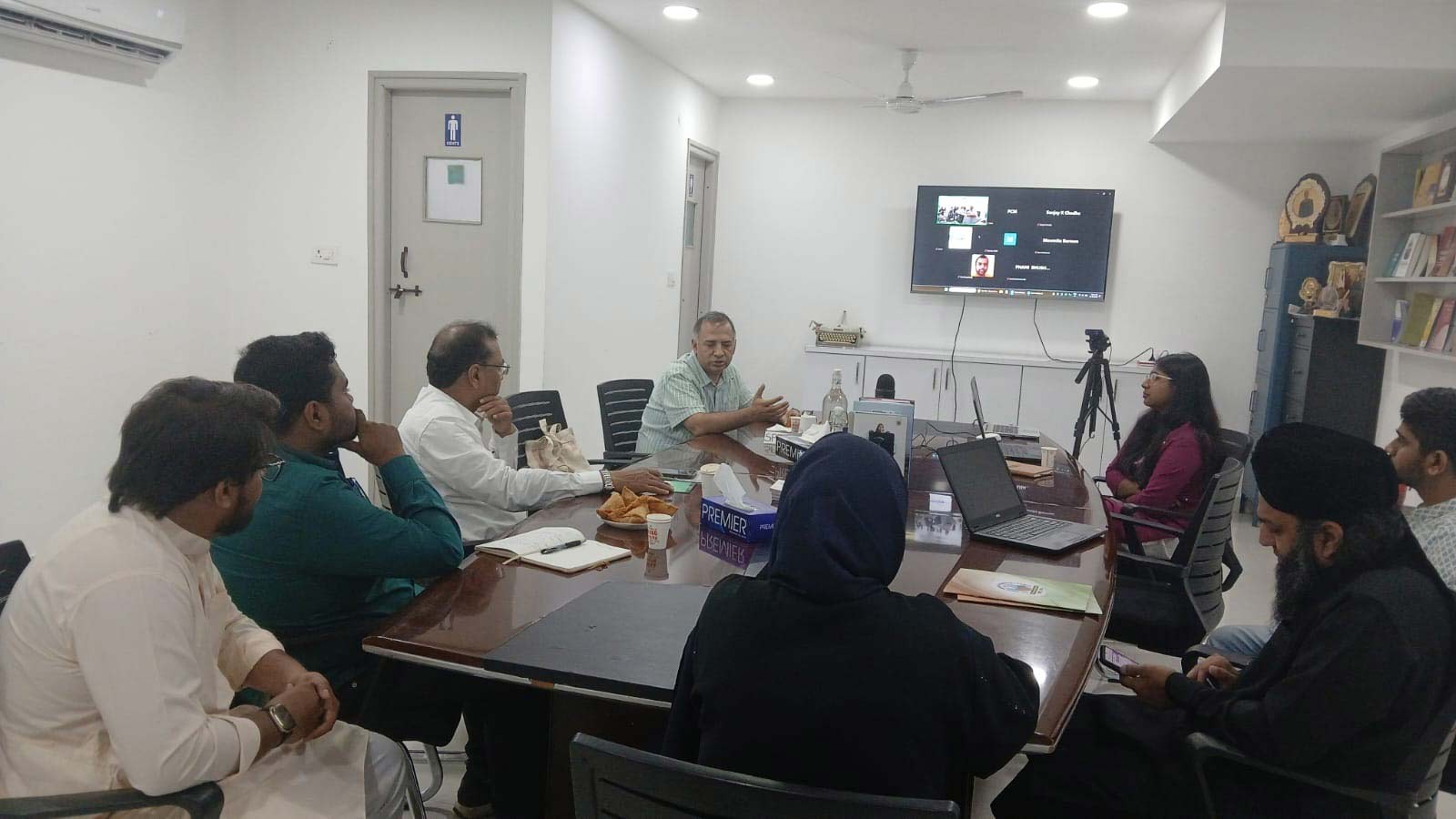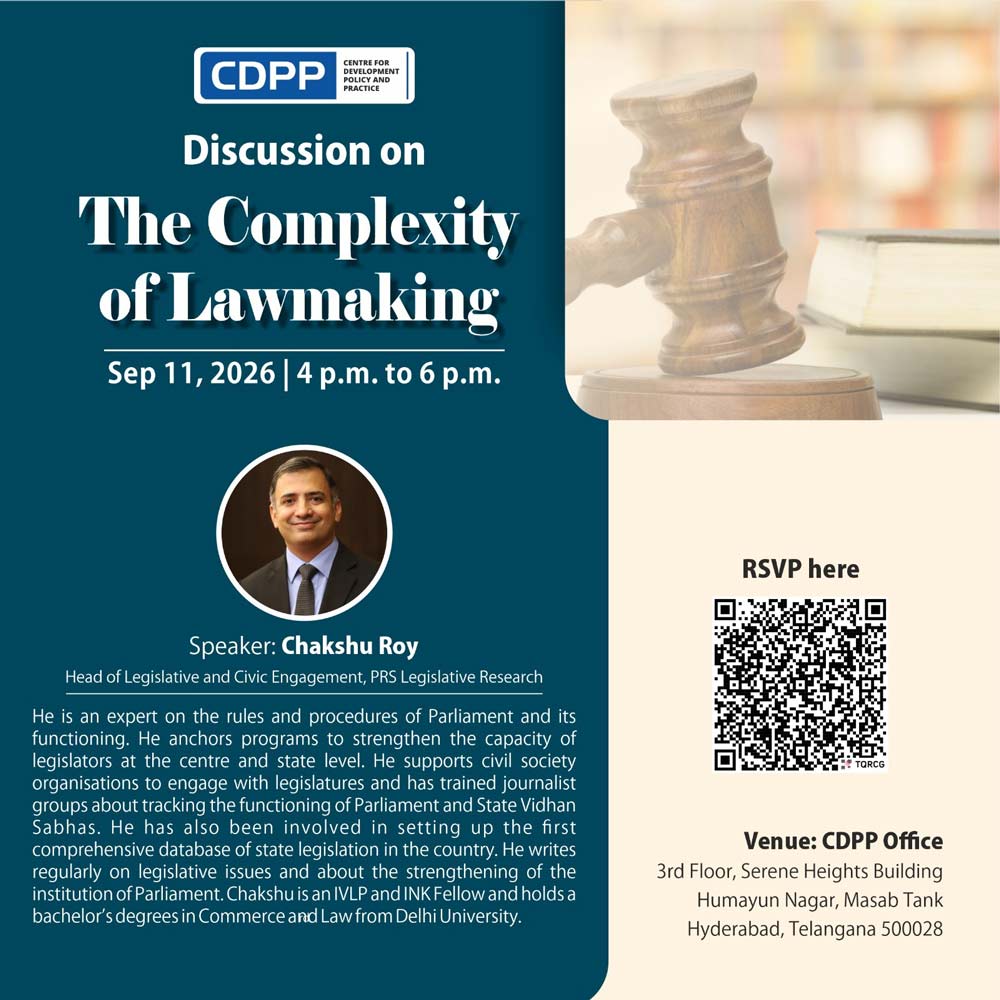
On Friday, 11 September 2026, the Centre for Development Policy and Practice (CDPP) organised a discussion titled “The Complexity of Lawmaking” at the CDPP office in Hyderabad. The session, held from 4:00 p.m. to 6:00 p.m., featured Mr. Chakshu Roy, Head of Legislative and Civic Engagement at PRS Legislative Research, and brought together participants for an interactive discussion on India’s lawmaking process, legislative institutions, democratic accountability and citizen engagement.
Mr. Roy began by briefly introducing the work of PRS Legislative Research, an independent organisation that provides non-partisan research and analysis on legislation, public policy and budgets to Members of Parliament and State Legislatures. He emphasised the importance of ensuring that legislators have access to credible data and analytical research when deliberating on complex policy questions.
A central theme of the discussion was the need to strengthen the entire lifecycle of lawmaking, rather than viewing the passage of a Bill as the end of the legislative process. Mr. Roy broadly situated this lifecycle across the pre-legislative, legislative and post-legislative stages, highlighting the need for stronger processes at each stage.
At the pre-legislative stage, he stressed the importance of first establishing whether a new law is actually required. Governance challenges should not automatically result in new legislation when existing laws or administrative mechanisms may be sufficient. Where legislation is necessary, the process should be informed by data, research, inter-ministerial consultation and meaningful stakeholder engagement. He noted that although India has a pre-legislative consultation policy, consultation practices remain inconsistent across ministries and governments.
The discussion then turned to the quality of legislative scrutiny and debate. Mr. Roy observed that legislatures are expected not merely to formally pass laws, but to subject them to serious deliberation. As legislation increasingly deals with technically complex subjects, both political debate and expert scrutiny become important. He raised concerns about laws being passed within short periods with limited discussion and noted that inadequate debate can also make it harder for courts to later understand legislative intent.
Particular emphasis was placed on the role of legislative committees. Committees can provide space for closer scrutiny of Bills, consultation with experts and stakeholders, and consideration of the practical implications of proposed legislation. The discussion also highlighted that civil society organisations and individuals can engage with such processes by making submissions and presenting their views before committees.
The session further examined the importance of post-legislative scrutiny. Laws operate within changing social, economic and technological contexts and therefore require periodic review. Mr. Roy discussed mechanisms such as legislative audits, impact assessments and sunset clauses as possible ways of ensuring that outdated or ineffective provisions do not remain indefinitely on the statute books.
Another important theme was the relationship between legislative design and access to justice. Participants raised concerns around court pendency and the growing burden of litigation. The discussion stressed that simply making more laws would not necessarily reduce disputes. Greater attention instead needs to be paid to anticipating possible litigation while drafting laws and considering mechanisms such as mediation, alternative dispute resolution and judicial impact assessments.
The interaction also explored the relationship between the legislature, executive and judiciary, particularly in situations where one institution steps into a space left unaddressed by another. Mr. Roy emphasised the importance of strong institutional processes and clearly functioning constitutional roles rather than excessive dependence on individual office-holders.
A substantial part of the discussion focused on the anti-defection framework and the use of party whips. Concerns were raised about the extent to which party directions may restrict the independence of elected representatives and limit bipartisan deliberation. The discussion considered whether legislators should have greater space to assess laws on their merits and represent constituency interests rather than being bound by party positions on every legislative issue.
The session also highlighted the importance of citizen participation in democratic governance. Public consultation, engagement with elected representatives, participation in legislative processes and protest were discussed as important forms of democratic feedback. Mr. Roy underlined that democratic participation should extend beyond voting during elections and should involve more regular engagement with institutions and lawmakers.
The interactive discussion also covered questions relating to international law, changing technologies and legal definitions, judicial appointments, the functioning of courts and institutional accountability.
The session concluded with a broader reflection on democracy as a process that necessarily involves debate, disagreement and institutional friction. The discussion underscored that such friction can be productive when supported by strong, consistent and transparent processes. Overall, “The Complexity of Lawmaking” offered participants an opportunity to reflect on how India’s legislative process can be strengthened through better scrutiny, evidence-based policymaking, institutional accountability and greater citizen and civil society engagement.