The “Ideal Victim” Problem: Who Does the Indian Justice Actually Serve?
10-06-2026

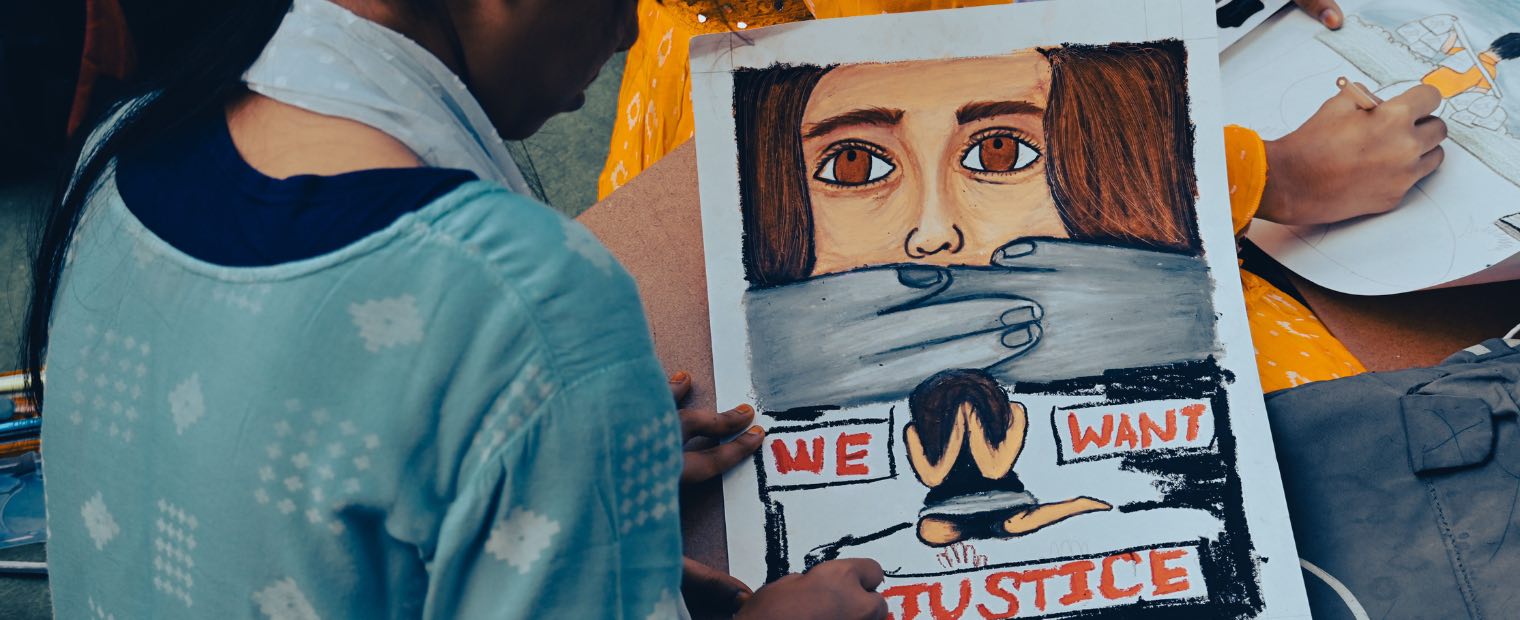
Gender justice reforms in India have a pattern. They come not through steady institutional work but after public outrage, or after years of survivor-led advocacy that should never have been needed in the first place. The Criminal Law Amendment Act 2013 came months after Nirbhaya. Acid sale regulations gained momentum only after many long campaigns by survivors. Must a victim become a symbol before the law moves?
The Politics of Sympathy
Criminologist Nils Christie described the “ideal victim” as a person whose harm creates full, unquestioned social sympathy. That sympathy is what gives a case political weight, and in practice, it is distributed far less evenly than the law implies. In India, ideal victimhood is not simply about blamelessness. It is shaped by societal visibility and a moral sense of right and wrong.
Public narratives around Jyoti Singh aligned with many of these characteristics. Her case moved reform for other reasons too. The assault was of exceptional brutality. It happened in Delhi, where national media is concentrated, in a political climate already charged by street protest. The ideal victim framework may explain part of what happened, but not all of it. When these conditions come together, institutional response becomes politically harder to avoid. What is worth asking is what happens when they do not.
Sexual Violence and Who Gets Remembered
According to the National Crime Records Bureau (NCRB), 96.8% of 29,536 rape cases registered in 2024 involved someone known to the victim, most often a family member or intimate partner. The cases that dominate public memory tend to involve stranger violence in public spaces. When recent gang rape cases evoke Nirbhaya, it is precisely because they fit the same template the public has come to associate with “real” sexual violence: a stranger attack, a public space. But the data tells a different story every year. The far more common case is one where a woman knows exactly who hurt her. She may have to keep living near him. That case appears to move through the system with considerably less urgency.
The conviction rate for rape in 2024 stood at 24.4%, with 2,06,777 cases waiting for trial. A chargesheeting rate of 81.3% suggests police are filing cases. What follows is harder to defend. Once cases reach court, hearings stretch across years while witnesses turn hostile. Courts have been slow to address biases about victim credibility, and these continue to influence outcomes. The process likely filters out cases in ways that reflect deeper inequalities in legal access and social power.
Domestic Violence: The Largest Category
Cruelty by husbands or relatives accounted for 1,20,227 of 4,41,534 registered crimes against women in 2024, nearly 27% of the total. An investigation into 500 dowry-related deaths found a consistent pattern of institutional inaction. The victim is often married and financially dependent. The violence is chronic, not singular. She does not fit the ideal.
Why does the most prevalent form of gender violence produce so little public urgency? The pattern may suggest what the ideal victim framework has long predicted: intimate harm, the kind embedded in daily life, struggles to command the attention attached to highly visible violence. Social hierarchy makes this problem worse.
Of 55,698 crimes against SC communities in 2024, rape accounted for 4,262 cases. Among ST communities, it was the second-largest crime category with 1,347 cases. These cases rarely shape national policy despite their scale. Which victims a national audience finds easiest to rally behind is not a neutral question. Caste and class appear to influence which victims receive public sympathy and attention. Policy conversations have been slower to acknowledge this reality than the data suggests.
Reform That Depends on Crisis
India is not alone in this. The murders of Sarah Everard in the UK and Mahsa Amini in Iran both triggered reform conversations driven by visibility and public identification with a particular kind of victim. When reform depends on that sympathy, unequal visibility becomes especially consequential. Gender justice is likely to carry that weight more acutely than most governance failures.
Real gains have been made. The 2013 amendments expanded the definition of sexual assault, and fast-track courts have helped process cases more quickly in some states. But a two-lakh-case trial backlog alongside a 24.4% conviction rate is difficult to read as progress keeping pace with the harm.
What Responsive Institutions Would Look Like
The challenge before India is not to pass better laws after the next tragedy. It is to build institutions where visibility is not a prerequisite for action. Adequately staffed fast-track courts should function consistently, without waiting for media pressure to prompt action. Police accountability should not weaken or fade away once cameras leave. Domestic violence cases need to carry the same institutional urgency as the ones that make national headlines.
Gender justice cannot be built on a spectacle. It has to be built on systems. A justice system that moves only after a spectacle is not fully responsive. It is reactive.
References
BBC. (2021, September 30). Sarah Everard was a wholly blameless victim, court hears. Www.bbc.com. https://www.bbc.com/news/uk-england-london-58745581
Brut India. (2026). Nirbhaya memories revived after 30-year-old woman was pulled into bus and gang raped. Brut. https://www.brut.media/in/articles/india/society/nirbhaya-memories-revived-after-30-year-old-woman-was-pulled-into-bus-and-gang-raped
Christie, N. (1986). The Ideal Victim. In: Fattah, E.A. (eds) From Crime Policy to Victim Policy. Palgrave Macmillan, London. https://doi.org/10.1007/978-1-349-08305-3_2
Geneva International Centre for Justice. (2022). Laxmi Agarwal: The acid attack survivor. https://www.gicj.org/lest-we-forget/2874-laxmi-agarwal-the-acid-attack-survivor
National Crime Records Bureau. (2026). Crime in India 2024: Statistics, Volume I. Ministry of Home Affairs, Government of India.
NBC News. (2023, September 18). How the death of Mahsa Amini changed Iran one year later. YouTube. https://www.youtube.com/watch?v=a1N0Ge73iek
Rita, S., Ioannou, M., Tzani, C., Fletcher, R., & James, T. (2025). How the Sarah Everard Case has Changed Public Perceptions of Police Officers. Violence against Women. https://doi.org/10.1177/10778012251366237
The Hindu. (2026). Daughters killed for dowry. The Hindu. https://www.thehindu.com/news/national/madhya-pradesh/daughters-killed-for-dowry/article71044688.ece
The Quint. (2026). Twisha Sharma dowry death: An investigation into 500 dowry cases. The Quint. https://www.thequint.com/gender/twisha-sharma-dowry-death-case-investigation-into-500-dowry-cases
Zeidan, A. (2023, August 18). Death of Jina Mahsa Amini | Protests, Iran, & Cause | Britannica. Www.britannica.com. https://www.britannica.com/biography/death-of-Jina-Mahsa-Amini