Regulatory complacency: How the West Asian conflict exposed India’s lack of energy security
20-03-2026

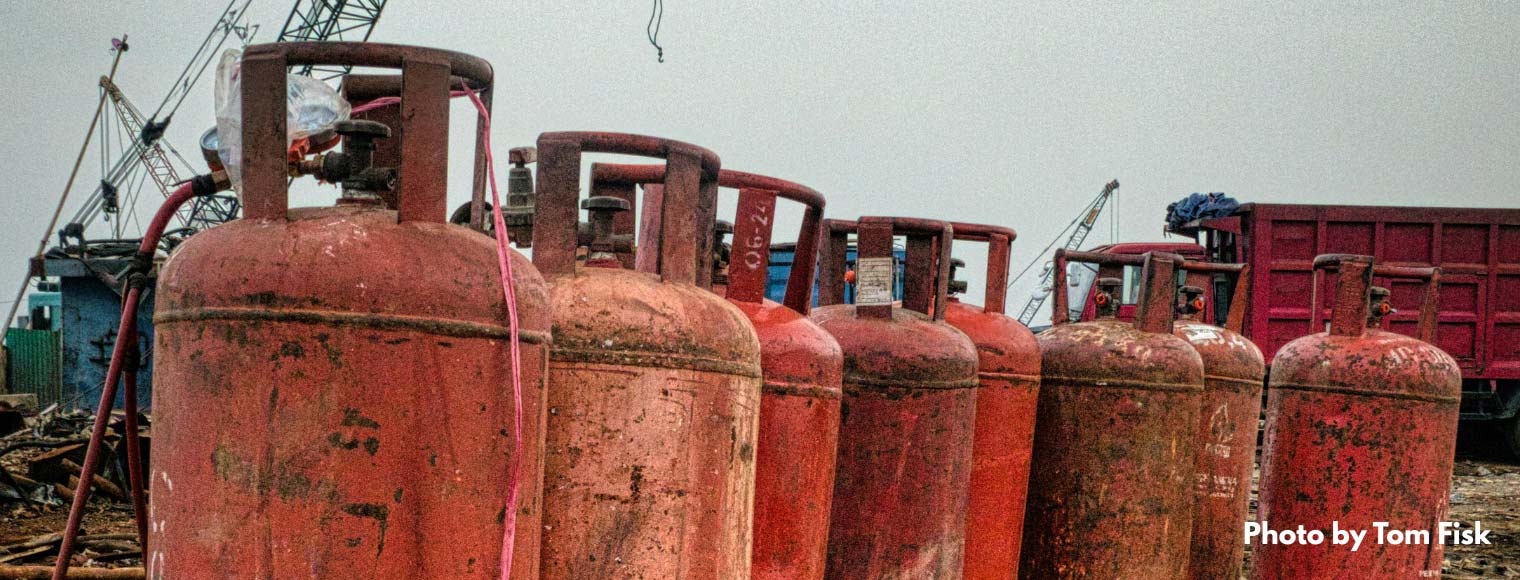
The repercussions of armed conflicts are inevitably borne by the rest of the world, especially when the war is between nations with resource monopolies that are leveraged to gain an economic and strategic advantage. The unwarranted US-Israeli war over Iran has pushed India in a corner, as the current government’s allyship lies with the US and Israel, however our energy resource dependence lies in the Middle east.
India’s LPG coverage has doubled over the past decade, from approximately 15 crore domestic users in 2014 to 33 crore domestic users in 2025. Pradhan Mantri Ujjwala Yojana (PMUY) must be credited for this, as it facilitated the adoption of over 10.33 crore LPG connections for BPL households since its formulation in 2016. India’s rise in LPG usage over the years was addressed by increasing imports, which stand at 60% of our total consumption. Of this, over 90% of our LPG imports travelled through Hormuz. Despite being the second largest importer of LPG in the world, India lost over 60% of its LPG supply due to conflict in a single region (International Energy Agency, 2026). The closure of the Strait of Hormuz caused widespread concerns over imminent LPG shortages, that spiralled out of control in many parts of the country as people raced to secure LPG cylinders
Contradictory reassurances
While the government reassured of sufficient supply, on March 9, 2026, the government ordered refineries to maximise LPG production under the Essential Commodities Act and prioritised domestic gas supply, limiting commercial supply to 80% (Ministry of Petroleum and Natural Gas, 2026a). Yet, MSMEs are facing the brunt as they struggle to secure cylinders, forcing many restaurants, catering services, food vendors, etc. to reduce their menus or cease operations altogether (Pant, 2026). Subsequently, on March 14, government urged PNG households to surrender LPG connections to reduce cylinder supply strains (Ministry of Petroleum and Natural Gas, 2026b). These reactive measures do not address the inefficiency of the regulatory framework that lacks supply and stock security.
Liquefied Petroleum Gas (Regulation of Supply and Distribution) Order, 2000, the primary regulatory structure governing LPG usage in India, focuses on pricing and usage limits, distributor licencing, subsidies, Direct Benefit Transfers, anti-hoarding, etc. However, these regulations and their successive amendments failed to establish mechanisms to maintain emergency stocks like the Strategic Petroleum Reserves (SPR). SPR holds 9.5 days of net crude oil imports, and oil companies hold an additional 64.5 days of net imports (Mohanty & Dutta, 2026). As a member country of International Energy Agency (IEA), we are required to hold 90 days of our net imports. These reserves are maintained under Integrated Energy Policy (2006) to improve our ability to withstand supply shocks (Planning Commission, 2006). On the other hand, India has only two storage facilities for LPG that can hold 1.4 lakh tonnes, only a few days’ worth of our LPG usage. These facilities were not created under a national policy aimed for emergency storage, rather made by the public-sector oil companies for operational cushions in case of regional supply issues and reduced import costs. As per Ministry of Petroleum and Natural Gas’ parliamentary grant demand of 2025, there were no plans to expand LPG storage facilities (M. Kalyanaraman, 2026).
Way Forward
India’s high dependency concentrated in one region, coupled with the lack of long-term reserves for LPG have been flagged by the IEA as significant cause for concern. Asia receives all West Asia’s LPG exports, 60% of which are enroute to India. Despite being the leading consumer, India has failed to secure a safe passage through the strait yet. Since the primary alternative, the U.S., is over a month away, India must immediately explore other lucrative options. Countries like Australia, Algeria, Canada, Norway, Malaysia, and the United Kingdom are the largest exporters of LPG outside the Gulf nations and U.S. However, we will have to face global competition for far lower quantities of LPG (International Energy Agency, 2026).
The same ministry that ensured the establishment of reserves for crude oil is responsible for all LPG related operations, yet there are substantial differences between the regulatory frameworks governing the two critical resources, especially in terms of sustainability. India must pivot from reactive policy to plug gaps in the supply chain to structural policy changes that predict and prepare for adversities. Long-term collaborations must be diversified beyond the West Asian region and backed by the government to promote private investments. India has successfully transitioned to cleaner domestic fuels at a large scale but needs a strong structure to back up the demand it has created in a sustainable matter.
References
International Energy Agency. (2026). Oil Market Report. https://iea.blob.core.windows.net/assets/a25ddf53-cd6c-4910-ac90-16bfd28399e7/-12MAR2026_OilMarketReport.pdf
M. Kalyanaraman. (2026, March 12). Why is India staring at LPG shortage? The Hindu. https://www.thehindu.com/business/surging-lpg-consumption-and-inadequate-storage-put-india-in-a-bind/article70731586.ece
Ministry of Petroleum and Natural Gas. (2026a, March 9). Order. https://static.pib.gov.in/WriteReadData/specificdocs/documents/2026/mar/doc2026310819601.pdf
Ministry of Petroleum and Natural Gas. (2026b, March 14). Order. https://egazette.gov.in/WriteReadData/2026/270962.pdf
Mohanty, S., & Dutta, R. (2026). India assures uninterrupted oil product supply; crude diversification offers cushion. https://www.spglobal.com/energy/en/news-research/latest-news/crude-oil/030326-india-assures-uninterrupted-oil-product-supply-crude-diversification-offers-cushion
Pant, K. (2026, March 13). From weddings to funerals, Iran war has hit life in India. Scroll.in. https://scroll.in/article/1091346/from-weddings-to-funerals-to-daily-meals-how-iran-war-has-hit-life-in-india
Planning Commission. (2006). Integrated Energy Policy Report of the Expert Committee Government of India Planning Commission New Delhi. https://lpr.adb.org/sites/default/files/resource/846/india-integrated-energy-policy.pdf.pdf