Hyderabad's Parasite Moment: What Urban Flooding Reveals About the Cities We Build
18-06-2026

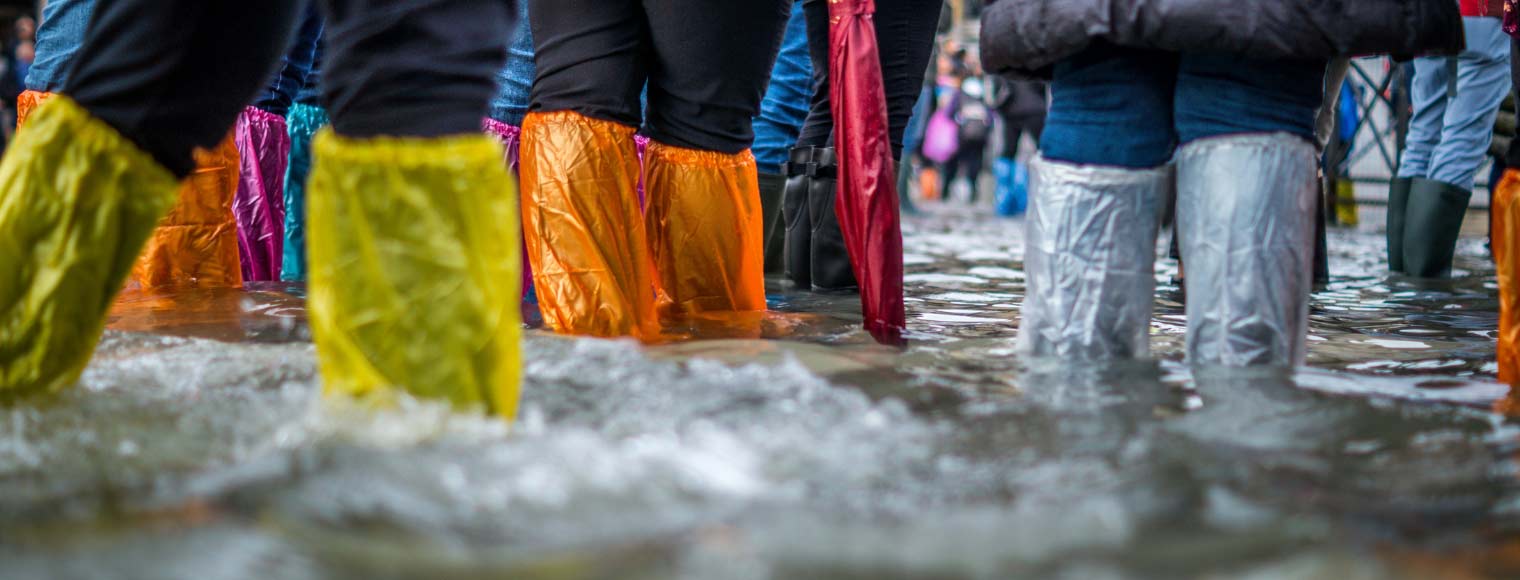
In one of the most haunting scenes from Bong Joon-ho's Academy Award-winning film Parasite (2019), two families experience the same rainstorm in entirely different ways. For the wealthy Park family, the overnight downpour is little more than an inconvenience. By the next morning, the skies have cleared and their sprawling hilltop home remains untouched. For the Kim family, who live in a cramped semi-basement apartment lower down the city, the rain becomes a disaster. Sewage-filled floodwaters rush into their home, destroying their belongings and displacing them overnight.
The brilliance of the scene lies not in the rain itself, but in what it reveals. The storm is the same. The city is the same. Yet vulnerability is distributed unequally through geography, infrastructure and class. Last week, Hyderabad witnessed a similar reckoning. Heavy rainfall on 17 June 2026 flooded roads across the city, paralysed traffic in the IT corridor, flooded residential neighbourhoods, and reportedly claimed lives through electrocution incidents linked to damaged infrastructure. Once again, the rain became the headline. But as Parasite reminds us, the real story lies beneath the water.
A City Built on Water, Now Drowning in It
For centuries, Hyderabad's urban landscape was shaped by water. The city developed around a sophisticated network of interconnected lakes, tanks and natural drainage channels that captured monsoon runoff and regulated water flows. These water bodies were not incidental features of the landscape. They were the infrastructure that made urban life possible.
Over time, however, the city's relationship with water changed. Rapid urbanisation transformed wetlands into housing layouts, narrowed drainage channels, and encroached upon lakes that once served as natural flood buffers. What had been ecological infrastructure increasingly came to be viewed as developable land.
The consequences have become impossible to ignore. Studies have repeatedly linked Hyderabad's growing flood vulnerability to the loss of lakes, encroachment of water bodies and disruption of natural drainage networks. During intense rainfall events, water follows its historical pathways, regardless of what now stands in its way. Roads become rivers, basements become reservoirs, and neighbourhoods discover that urban planning decisions made decades earlier continue to shape their present vulnerabilities.
In this sense, Hyderabad is not an exception. It is a warning.
The Geography of Vulnerability
One of the most overlooked aspects of Parasite is its obsession with elevation. The wealthy live uphill. The poor live downhill. Every movement between social classes is represented physically through movement across the city's topography. Urban flooding operates through a similar logic.
Flood risk is never distributed equally across a city. It is shaped by where people live, the quality of infrastructure they depend upon, and the extent to which planning decisions have protected or exposed them to environmental hazards. Those living near encroached lakes, blocked drainage channels or low-lying settlements often bear the greatest risks when storms arrive.
Yet contemporary urban flooding also challenges conventional assumptions about vulnerability. Hyderabad's recent floods did not only affect informal settlements or economically marginal neighbourhoods. The city's celebrated IT corridor, often portrayed as a symbol of India's technological modernity, was among the worst affected. Commuters reported spending hours trapped in traffic. Roads became impassable. Corporate campuses and gated residential complexes found themselves confronting the same hydrological realities as the rest of the city.
The lesson is significant. Climate risks do not disappear with rising property values.
Like the Parks in Parasite, many urban residents assume that wealth can insulate them from the consequences of poor planning. It can certainly reduce some risks. It cannot eliminate them. Floodwaters do not recognise real estate premiums.
When Development Forgets Ecology
The Hyderabad floods also expose a deeper problem in contemporary urban policy. For decades, Indian cities have equated development with expansion. More flyovers, wider roads, larger housing developments and greater built-up area have become indicators of urban progress. Environmental assets such as lakes, wetlands and open spaces are frequently treated as obstacles to growth rather than essential urban infrastructure.
This approach has produced cities that are economically dynamic but environmentally fragile.
Research on Hyderabad's urban expansion highlights how rapid growth has dramatically increased impervious surfaces across the metropolitan region. As concrete replaces soil and wetlands disappear, rainwater has fewer places to infiltrate naturally. Instead, it accumulates rapidly on roads and in low-lying areas, overwhelming drainage systems designed for a very different urban landscape.
The irony is difficult to miss. Cities invest billions in infrastructure intended to support growth while simultaneously undermining the ecological systems that make those investments sustainable.
Nature, however, keeps records.
The streams that once connected lakes continue to exist, even when buried beneath roads. Floodplains continue to function as floodplains, even when converted into residential colonies. Monsoon water continues to seek the paths that urban development has attempted to erase.
Every flood becomes a reminder of these forgotten geographies.
Climate Change Raises the Stakes
If urban planning decisions created Hyderabad's vulnerabilities, climate change is magnifying them.
Scientific evidence increasingly suggests that cities across South Asia will experience more frequent and intense rainfall events as global temperatures rise. What was once considered an extreme weather occurrence is becoming increasingly common. Urban drainage systems designed for historical rainfall patterns are struggling to cope with changing climatic realities.
This means that flooding can no longer be treated as an occasional emergency. It must be understood as a structural challenge that intersects with housing, infrastructure, public health, transportation and economic productivity.
The costs are substantial. Beyond immediate property damage, urban flooding disrupts livelihoods, reduces worker productivity, damages public infrastructure and places enormous pressure on emergency services. The economic impacts ripple across the city long after the water recedes.
In rapidly growing urban centres such as Hyderabad, climate resilience is no longer an environmental concern alone. It is a development imperative.
Rethinking Urban Policy Before the Next Storm
Responding effectively requires moving beyond reactive crisis management. First, urban water bodies must be recognised as critical infrastructure. Lakes, wetlands and drainage corridors provide flood mitigation services that are difficult and expensive to replicate through engineered solutions alone.
Second, city planning must adopt a watershed perspective. Water does not respect municipal boundaries, administrative jurisdictions or real estate divisions. Effective flood management requires understanding how water moves across the broader urban ecosystem.
Third, drainage infrastructure requires systematic investment, maintenance and upgrading. Rapid urban growth has often outpaced the capacity of stormwater systems, creating vulnerabilities that become visible only during extreme rainfall events.
Finally, land-use regulation must be enforced consistently. Encroachments on lakes, floodplains and drainage channels are not merely environmental concerns. They are public safety concerns.
These measures may lack the political appeal of large-scale infrastructure projects. A restored wetland rarely attracts the attention that a new flyover does. Yet resilience is often built through precisely these less visible investments.
Beyond the Floodwaters
The enduring power of Parasite lies in its refusal to portray disaster as accidental. The flood scene is not simply about weather. It is about the cumulative consequences of inequality, neglect and planning choices embedded within the city itself.
Hyderabad's recent flooding deserves a similar reading.
The waterlogged roads, paralysed traffic and damaged infrastructure were not solely the result of a few hours of rainfall. They reflected decades of decisions about where and how the city would grow, what forms of infrastructure would be prioritised, and which ecological systems could be sacrificed in the name of development.
When floodwaters rise, cities reveal themselves. They expose forgotten lakes, buried streams and neglected drainage channels. They reveal whose neighbourhoods remain protected and whose do not. They show whether urban development has worked with nature or attempted to build over it.
Like the Kim family running downhill through the flooded streets of Seoul, Hyderabad's residents are increasingly confronting the consequences of an urban model that confused concrete with resilience.
The challenge before policymakers is therefore larger than preparing for the next monsoon. It is about reimagining urban development itself. The real question is not whether another storm will come. It is whether the city will learn from this one.
References
Economic Times. (2025). How rain brought Hyderabad's IT corridor to a crawl. Available at: https://economictimes.indiatimes.com/news/new-updates/how-4-cm-of-rain-brought-hyderabads-it-corridor-to-a-crawl/articleshow/131623850.cms
Mongabay India. (2020). Hyderabad floods highlight the need for a disaster mitigation and climate resilience plan. Available at: https://india.mongabay.com/2020/11/hyderabad-floods-highlight-the-need-for-a-disaster-mitigation-and-climate-resilience-plan/
Springer Nature. (2025). Urban flood vulnerability assessment for Hyderabad city, India. Available at: https://link.springer.com/article/10.1007/s44327-025-00161-4
Times of India. (2024). One-third of Hyderabad highly vulnerable to floods, says study. Available at: https://timesofindia.indiatimes.com/city/hyderabad/one-third-of-hyderabad-highly-vulnerable-to-floods-says-study-by-tata-institute-of-social-sciences/articleshow/126339224.cms